
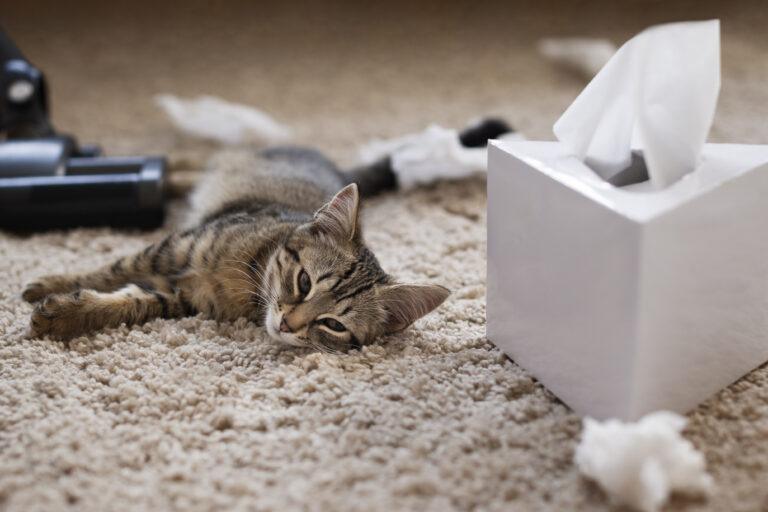
Cat pee in your carpet creates a stubborn smell that won’t quit on its own. The urine soaks deeply into the carpet fibers and padding, making it difficult to remove completely. Many homeowners try standard cleaning methods only to have the smell return days later. Expert carpet cleaners know the secret lies in breaking down the urine at a molecular level, not just masking the odor. This guide walks you through proven methods to eliminate cat pee stains and odors for good.
Cat urine contains uric acid that breaks down and releases sulfur-like compounds. These compounds create that strong, unpleasant smell that sticks around. The odor lingers in your carpet if it is not properly treated. Cats possess a highly developed sense of smell. If they detect their scent in a spot, they’ll likely pee there again. You need enzymatic cleaners designed to break down uric acid crystals. These cleaners neutralize the odor at its source, preventing your cat from returning to the same spot. Understanding what causes the smell helps you remove cat pee from your carpet permanently.
When you find cat pee on your carpet, act fast to stop the odor from setting in. Start by blotting up as much urine as possible using paper towels or a clean cloth. Place a thick layer of paper towels over the affected area and press down firmly to soak up the liquid. Continue blotting until the paper towels are nearly dry. Don’t rub the spot, this spreads the urine deeper into the carpet fibers. If you’re using a cloth, apply pressure and repeat the blotting process until barely any moisture remains. The quicker you address the problem, the better your chances of preventing lingering odors.
Select a cleaning solution specifically designed to eliminate cat urine odors and stains from your carpet. Look for enzymatic cleaners that break down the uric acid in cat pee, removing both the stain and odor at a molecular level. These cleaners target the specific compounds in cat urine for thorough removal. Skip ammonia-based cleaners, they actually make the urine smell stronger and encourage cats to mark the same spot again. Select products labeled as pet-friendly and safe for use on carpets to prevent damage to your flooring. Follow the manufacturer’s instructions carefully to get the best results. Selecting the right cleaning solution is crucial for effectively addressing cat urine stains and odors in your carpet.
Pour the enzymatic cleaner directly onto the cat urine stain on your carpet, making sure you cover the entire area. Enzymatic cleaners break down the urine crystals, eliminating the source of the smell instead of just covering it up. Gently blot the area with a clean cloth to help the cleaner sink deeper into the carpet fibers. Avoid rubbing too hard, as this can spread the stain and damage the carpet. Let the cleaner sit for the time recommended on the product label. This waiting period lets the enzymes effectively break down the urine molecules. After the time has passed, proceed to the next steps to completely remove the cat urine odor from your carpet.
After applying the enzymatic cleaner, blot the area with a clean cloth and let the carpet air dry completely. Speed up drying by using a fan or opening windows for better airflow. Once the carpet is dry, sprinkle baking soda generously over the affected area. Let the baking soda sit for several hours or overnight to absorb any remaining odors. Vacuum up the baking soda thoroughly. For a final touch, mix equal parts water and white vinegar in a spray bottle and lightly mist the carpet. The vinegar neutralizes any lingering odors, leaving your carpet with a fresh scent.
Keep your cat’s litter box easily accessible at all times, ensuring it remains clean and in a quiet, convenient location. Place multiple litter boxes around your home if you have more than one cat. Schedule regular playtime and provide your cat with toys and scratching posts to reduce stress and anxiety, which can lead to inappropriate urination. Buy enzyme-based cleaners to thoroughly clean any accidents right away, as leftover odors can attract your cat to pee in the same spot again. Consult your veterinarian to rule out any underlying health issues that may be causing your cat’s accidents.
Related Topics: